
Project Context and Overview
Adra is a leading housing association operating across North Wales, managing a diverse portfolio of homes, many of which were constructed before modern energy efficiency standards existed. Like many social landlords, Adra faces the challenge of upgrading an ageing housing stock while meeting ambitious national decarbonisation targets, responding to rising energy costs, and supporting residents through a cost of living crisis.
The Fabric First Retrofit programme was delivered through Optimised Retrofit Programme (ORP) 2.1, part of Welsh Government’s strategic approach to decarbonising social housing. ORP adopts a “best path for each home” philosophy, recognising that different building types require different routes to net zero.
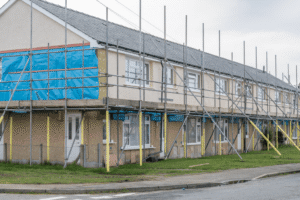 Adra’s ORP 2.1 project focused on 74 properties across Criccieth, Dyffryn Ardudwy, Blaenau Ffestiniog and Penrhyndeudraeth. These homes varied in age, construction type and condition, but shared common challenges: poor thermal performance, high heat loss, and residents experiencing homes that were difficult and expensive to keep warm.
Rather than prioritising low carbon heating technologies at this stage, Adra deliberately chose a fabric first approach. This decision reflected the belief that the most reliable and equitable way to reduce both carbon emissions and fuel bills is to first minimise energy demand through high quality insulation, airtightness improvements, and upgraded building components.
A fabric first approach to decarbonisation
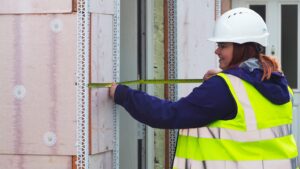 Fabric first retrofit places the building envelope — walls, roofs, windows and doors — at the heart of decarbonisation. By reducing heat loss and stabilising internal temperatures, homes require significantly less energy to maintain comfort. This approach delivers immediate benefits to residents while laying the groundwork for future low carbon heating systems. For Adra, adopting a fabric first strategy also reflected a clear understanding of its housing stock. Many of the properties included in ORP 2.1 were of solid wall or non traditional construction, where fabric improvements offer the greatest performance gains.
Key objectives of the fabric first approach were to:
- Improve overall energy efficiency and EPC ratings
- Reduce operational carbon emissions
- Increase indoor comfort and thermal stability
- Address damp, condensation and mould risks
- Lower residents’ energy bills and tackle fuel poverty
- Future proof homes for low carbon heating
By focusing investment on the longevity and performance of the building fabric, the project avoided the risk of installing new heating technologies into homes that would otherwise continue to waste energy.
Technical measures and delivery
Innovation in Materials and Methods
To improve productivity and consistency, Adra transitioned from traditional hand applied render systems to the Weber monocouche pump applied render system. This innovation delivered multiple benefits:
- Faster installation across multiple sites
- Improved finish quality and consistency
- Reduced labour intensity and fatigue
- Enhanced quality assurance
Adopting new methods required investment in training and confidence building for installers, but it also accelerated learning and modernised delivery practices, an important step in preparing the supply chain for scale.
Intelligent Energy Systems and Monitoring
Each retrofitted home was equipped with an Intelligent Energy System (IES), providing real time monitoring of energy use and environmental conditions. While baseline pre retrofit data was not available due to project timing, the post installation data is now helping Adra understand how homes perform in real world conditions.
These insights are informing future retrofit planning, supporting evidence based decision making, and strengthening Adra’s contribution to Welsh Government’s growing body of retrofit performance data.
External Wall Insulation as a Core Intervention
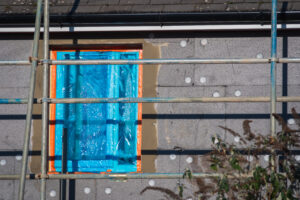
External Wall Insulation (EWI) formed the backbone of the retrofit programme. Installed across the majority of properties, EWI significantly reduced heat loss through external walls, transformed the appearance of homes, and improved weather resistance.
However, Adra placed strong emphasis on detailing and build quality, recognising that poorly designed interfaces can undermine performance and durability. Many properties required the extension of eaves to accommodate thicker insulation layers. While this added cost and complexity, it removed the need for capping trims, reduced moisture risk, and resulted in a more robust and longer lasting insulation system.
The programme also provided an opportunity to address legacy issues, including the removal of redundant chimneys in conjunction with roofing and insulation works. This reduced ongoing maintenance liabilities and improved airtightness, while making homes better suited to future heating upgrades.
Working in occupied homes
A Tenant First Delivery Model
Delivering retrofit works in occupied homes requires sensitivity, flexibility and trust. Adra recognised early on that technical success alone would not determine the overall success of the programme — resident experience would be equally critical.
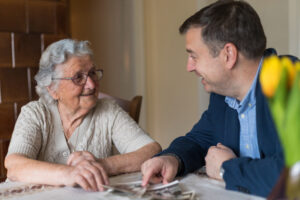
A dedicated Tenant Liaison Officer (TLO) played a central role in delivery. Acting as a bridge between residents, contractors and Adra’s internal teams, the TLO ensured clear communication before works began, during installation, and after completion.
Residents were kept informed of what to expect, how long works would take, and who to contact if issues arose. This approach helped reduce anxiety, minimise disruption, and build positive relationships during a period of significant change.
Supporting Understanding and Behaviour Change
Retrofit does not end when construction finishes. Adra provided residents with practical information on how to live well in their upgraded homes, including guidance on ventilation, heating behaviour and understanding new monitoring technologies.
Helping residents make sense of energy data and understand how everyday behaviours affect comfort and bills supported longer term carbon savings and improved outcomes. The project reinforced the importance of combining physical improvements with ongoing resident support.
Building skills and strengthening the local economy
Addressing the Retrofit Skills Gap
One of the most significant barriers to scaling retrofit nationally is the shortage of skilled workers. Adra’s ORP 2.1 programme was delivered alongside a deliberate strategy to build local capacity and address this skills gap in North Wales.
Through close collaboration with Tŷ Gwyrddfai Decarbonisation Hub, Weber Saint Gobain and regional contractors, training was embedded directly into project delivery. Installers gained hands on experience in EWI systems, pump applied renders, and retrofit best practice while working on real homes.
Tŷ Gwyrddfai: A Regional Asset
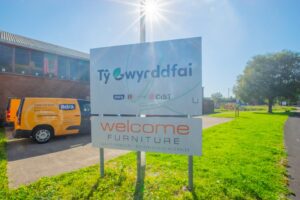 The learning and momentum generated through ORP 2.1 helped inform the development of Tŷ Gwyrddfai, a pioneering decarbonisation hub based in Penygroes. The hub brings together housing, further education, higher education and industry in a single location, supporting training, innovation and research.
Since opening, Tŷ Gwyrddfai has trained hundreds of local tradespeople in retrofit and green skills, supported small and medium sized enterprises, and strengthened the regional supply chain. The Fabric First Retrofit programme directly demonstrated the need for, and value of, this investment in people and skills.
Challenges and lessons learned
- The project surfaced a range of challenges that generated valuable learning for future phases.
- Supply chain disruption, particularly during the COVID 19 pandemic, led to material shortages and rising costs, highlighting the importance of resilient procurement strategies.
- Workforce capacity constraints reinforced the need to plan training early and align delivery programmes with skills development.
- Property variation, even within similar streets or estates, required flexibility and adaptive solutions to maintain quality.
- Data limitations demonstrated the importance of capturing baseline performance information as early as possible.
- Tenant disruption risks confirmed that strong communication and relationship management are as critical as technical design.
Adra has embedded these lessons into subsequent ORP phases and its wider decarbonisation strategy.
Key learning
- Fabric first retrofit delivers immediate, equitable benefits
- High quality detailing is critical to long term performance
- Resident engagement must be continuous, not transactional
- Skills investment is inseparable from technical delivery
- Performance monitoring enables better decision making
- Flexibility and learning are essential when working at scale
Strategic and policy alignment
The Fabric First Retrofit programme aligns closely with a range of national and regional frameworks, including:
- Optimised Retrofit Programme (Welsh Government)
- PAS 2030 / PAS 2035 retrofit standards
- Welsh Housing Quality Standard (WHQS)
- Well being of Future Generations (Wales) Act 2015
- Wales Net Zero Housing Strategy
- Decarbonisation of Homes in Wales Route Map