
About the Welsh Zero Carbon Hwb
This case study has been developed as part of the Welsh Zero Carbon Hwb, a collaborative initiative coordinated by ClwydAlyn Housing Association and funded by Welsh Government. The Hwb brings together housing providers and experts across Wales to accelerate learning, test innovation, and deliver practical, low-carbon, affordable housing solutions.
Tai Tarian’s solar PV rollout demonstrates how this ambition can be translated into practice. It shows how an organisation can move from relatively small programmes to structured, high-volume delivery, while continuing to learn, adapt and improve. Just as importantly, it highlights that scaling retrofit is not only a technical or operational challenge, but one that depends on people, trust and long-term relationships with residents.
Project context and overview
Sustainable Homes: “We will provide warm, energy-efficient homes to our customers with the aim of sustaining successful tenancies and homes tenants can be proud of.”
Throughout the programme, Tai Tarian deliberately framed this work in terms of homes rather than assets, recognising that each intervention directly affects tenants’ daily lives, comfort and financial security. This distinction shaped both the design and delivery of the programme.
Within this context, solar PV offers a clear and tangible way to deliver change. It enables homes to generate clean energy, reduces reliance on the grid and lowers energy bills, while supporting broader decarbonisation goals.
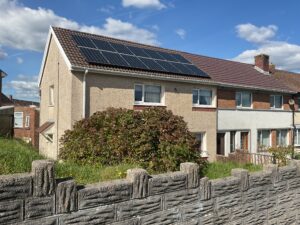
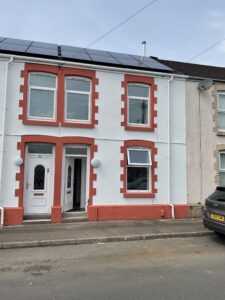
Over a 12-month period, Tai Tarian installed 1,639 solar PV systems across its housing stock, funded through the Optimised RetroFit Programme (ORP).
This represented a significant increase in delivery compared to previous programmes. However, the importance of the project lies not only in the number of installations, but in how that scale was achieved – through structured planning, flexible delivery models, and a strong focus on tenant engagement.
This scale-up builds on earlier phases of work across the portfolio. Initial ORP projects trialled solar PV alongside battery storage in smaller numbers of homes, helping to demonstrate clear reductions in tenants’ reliance on grid electricity and providing early insight into system performance in use.
At the same time, additional installations were delivered through parallel programmes, including new build developments and homes receiving heat pumps, meaning the overall level of solar deployment across the organisation was even higher.
In some cases, solar PV became part of a wider transition toward low-carbon, future-ready homes, often complemented by wider improvements through programmes such as Green Voids, where fabric upgrades, ventilation and renewable systems are delivered together.
From pilot to scale: building a delivery model
Flexible Procurement as an Enabler
Early programmes showed that rigid frameworks could limit delivery. In response, Tai Tarian introduced a long-term, flexible framework agreement, allowing for:
- different delivery models (supply, design and install; design and install only)
- direct procurement of solar panels when funding allowed
- the ability to scale quickly as opportunities arose.
- This flexibility proved essential in supporting rapid expansion.
Achieving High-Volume Delivery
With these systems in place, Tai Tarian was able to significantly increase delivery rates, reaching up to 70 installations per week at peak.
Once properties were prepared, installations themselves were relatively quick, typically completed within a single working day, enabling a rhythm of delivery that made this level of output possible. This level of output reflects not only planning and procurement, but also confidence in the delivery model, built through experience and strengthened through continuous learning.
Target Energy Pathways and the Plot Bank
A key innovation underpinning delivery was the use of target energy pathways (TEPs) combined with a “plot bank” of suitable properties.
- Each home was assessed to determine:
- what improvements were appropriate
- when they should be delivered.
These assessments informed a pipeline of ready-to-deliver properties, ensuring:
- a consistent flow of work
- reduced downtime between installations
- the ability to substitute properties where needed.
 Maintaining this pipeline required constant management. As delivery accelerated, the same teams were often responsible for both surveying new homes and installing systems, creating a continuous balancing act between feeding the plot bank and maintaining installation rates. This operational tension became a key part of delivering at scale.
Delivering in occupied homes: a tenant-first approach
Building Trust Through Early Engagement
A defining feature of the programme was the use of face-to-face engagement at the earliest stage.
During pre-installation visits, tenants met:
- retrofit assessors
- electrical inspectors
- tenant liaison officers.
Many of these staff brought deep knowledge of the local area and housing stock, enabling more responsive conversations and practical decision-making. This helped to tailor installations to individual homes while maintaining consistency across the programme.
This approach allowed technical, practical and personal questions to be addressed in a single interaction. It also gave tenants an opportunity to influence decisions, such as the positioning of equipment within the home.
By combining technical assessment with meaningful engagement, the programme reduced uncertainty and helped tenants to feel part of the process rather than subject to it.
Supporting Understanding
The programme demonstrated that engagement is not simply about providing information, but about supporting understanding in ways that work for different households.
To achieve this, Tai Tarian used a mix of approaches.
- Written information packs and guides
- Videos explaining solar PV systems
- Real-life stories from tenants who had already received installations
Peer-to-peer communication proved particularly effective. Hearing directly from other residents helped to build trust, address concerns and make the technology more relatable.
Experience from earlier projects reinforced this. In early installations, tenants who could see their energy generation and savings in real time developed stronger confidence in the technology and a clearer understanding of its benefits.
Learning from Tenants and Reducing Refusal
Tenant refusal was identified as a key challenge, particularly where concerns could spread quickly through communities.
Where refusals occurred, they could influence neighbouring households through word of mouth, reducing confidence in the programme and affecting delivery rates.
Rather than treating refusal as a fixed constraint, Tai Tarian adopted a learning-led approach, focusing on:
- understanding the causes of refusal
- gathering feedback from tenants
- adapting engagement strategies accordingly.
This resulted in refusal rates being reduced to 26.9%, demonstrating that engagement can significantly influence outcomes.
Importantly, many of these improvements emerged through live delivery, with solutions developed and refined as the programme progressed.
Engagement as an Ongoing Process
A key lesson from the programme is that engagement does not end once installation is complete.
Residents’ needs evolve over time, particularly as they begin to engage with new technologies and energy systems. The programme highlighted the importance of:
- providing ongoing support
- offering multiple ways to access information
- allowing residents to revisit guidance when needed.
This longer-term approach is reflected in subsequent work, including the introduction of environmental monitoring systems across homes with PV. These systems provide insights into temperature, humidity and overall performance, helping Tai Tarian to better understand homes in use and identify where further support may be needed.
Recognising Different Levels of Engagement
Tai Tarian also observed that tenants engage with energy systems in different ways.
Some residents want detailed information about performance and energy use, while others prefer systems that operate in the background with minimal interaction. Recognising this variation is essential. It requires:
- flexible communication approaches
- multiple formats for information
- avoiding one-size-fits-all solutions.
Framing Benefits in Terms That Matter
Another important learning was the need to frame solar PV in ways that resonate with tenants’ lives.
While carbon reduction remains important, engagement increasingly focused on:
- lower energy bills
- protection from rising costs
- energy security and future resilience.
This reframing connects decarbonisation with everyday experience, making it more accessible and relevant.
Challenges and lessons learned
Delivering at this scale highlighted a number of challenges, including:
- rigid procurement frameworks limiting flexibility
- tenant refusal affecting delivery pipelines
- maintaining a sufficient plot bank
- grid constraints and DNO delays
- physical limitations such as roof condition or shading.
These challenges were addressed through an adaptive and learning-led approach, including:
- developing more flexible frameworks
- strengthening tenant engagement
- using the plot bank to maintain flow
- building relationships with network operators
- identifying issues early through coordinated site visits.
Many of these solutions were shaped through real-world experience, reinforcing the importance of learning by doing when delivering retrofit at scale.
Key learnings
- Scaling retrofit requires structure – planning, pipelines and coordination are essential
- Flexibility supports delivery – procurement models must adapt to changing conditions
- Tenant engagement is fundamental – trust and understanding directly influence outcomes
- Delivery is relational – ongoing support is as important as installation
- Learning must be continuous – each phase should inform the next
- Framing matters – energy security and affordability resonate strongly with residents
Community engagement and normalising renewables
Tai Tarian’s approach also extends beyond individual homes.
Through community benefit initiatives, solar PV systems are being installed on:
- schools
- community buildings
- local organisations.
This supports not only energy generation, but the normalisation of renewable technologies within communities, helping to build trust and familiarity.
By linking individual retrofit interventions to visible community benefits, the programme contributes to broader cultural change, not just technical delivery.
Strategic and policy alignment
The programme aligns with key Welsh Government frameworks, including:
- Optimised Retrofit Programme (Welsh Government)
- Welsh Housing Quality Standard (WHQS)
- Wales Net Zero Housing Strategy
Download the Tai Tarian PV Deployment Case Study
Lawrlwythwch Astudiaeth Achos Defnyddio PV Tai Tarian